

Runway Incursion 101: Definition, Causes, Examples & Prevention
22 Oct, 2026
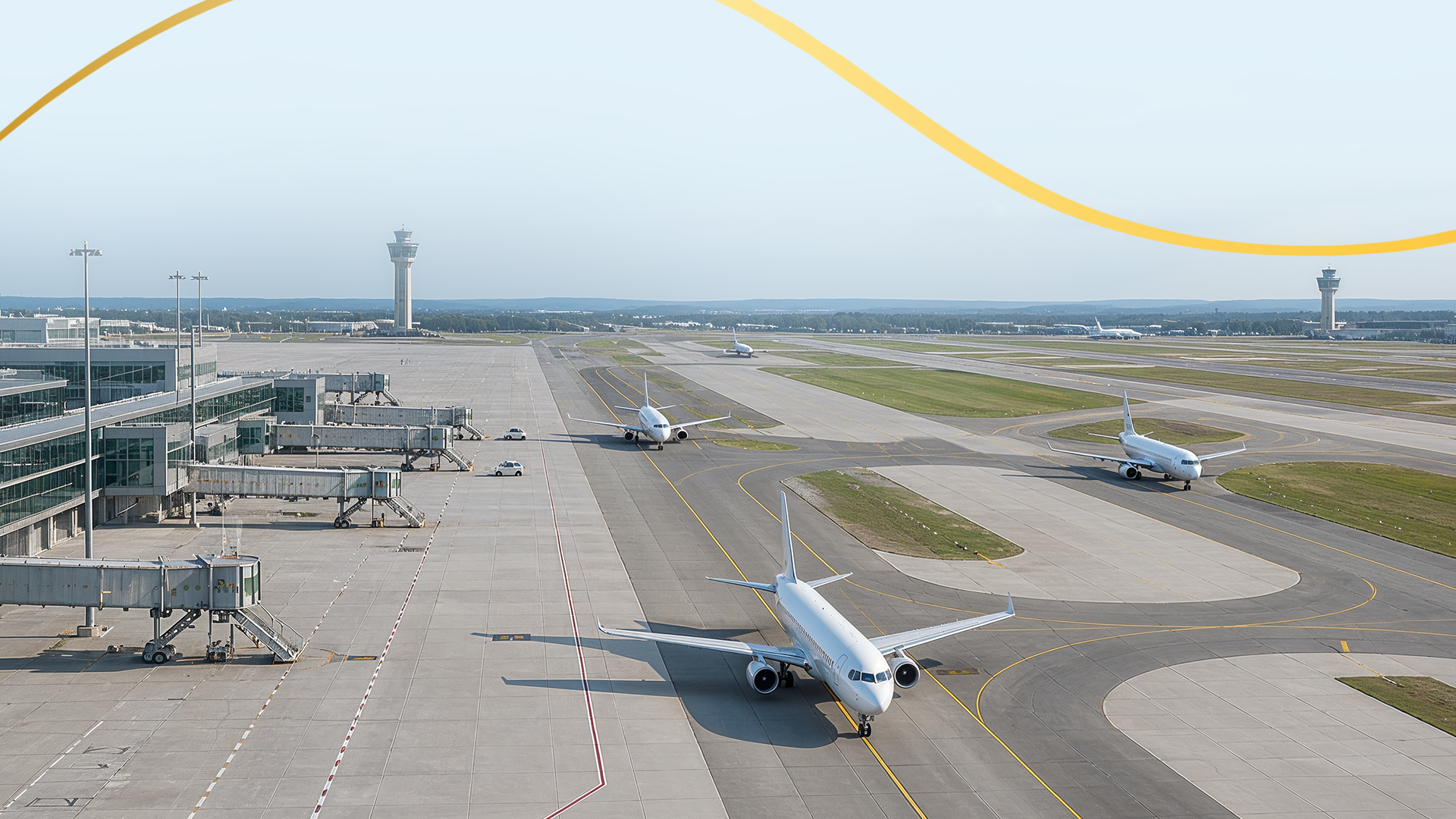
Safety is one of the most critical aspects of aviation today, and this concern is not a recent development. It has been a top priority for aviation leaders, from regulatory bodies like the FAA to airline executives and airport authorities, who are working tirelessly to ensure the well-being of passengers who rely on air travel.
When speaking of aviation safety, only a few terms hold significant weight, being the most relied upon when ensuring everything operates as intended. Among these terms, “runway incursion” is particularly significant in today’s aviation industry.
You see, to ensure that commercial aviation remains one of the safest modes of transportation in the world, flight operations must adhere to a strict set of rules, particularly regarding runway procedures. This is crucial because the runway is among the most vulnerable components in aviation. This is why operators usually seek comprehensive solutions provided by an expert aviation support provider, like JBS.
But what exactly is a runway incursion, why does it happen, and how is the industry working to prevent it and maintain safety? This blog will break it all down for you, from A to Z.
What Exactly is a Runway Incursion?
The International Civil Aviation Organization (ICAO) defines a runway incursion as “any occurrence at an aerodrome involving the incorrect presence of an aircraft, vehicle, or person on the protected area of a surface designated for the landing and takeoff of aircraft”.
In simple terms, a runway incursion means that an aircraft, vehicle, or person is incorrectly present on a runway or its protected area when they should not be. This could involve another aircraft crossing the runway, an airport service vehicle entering without clearance, or an unauthorized person accessing a restricted area.
It is also important not to confuse a runway incursion with a runway excursion. A runway incursion involves something incorrectly entering or occupying the runway area, while a runway excursion happens when an aircraft leaves the runway surface during takeoff, landing, or taxiing.
A common question is whether every runway incursion is a near miss. The answer is no. Some incursions have no immediate safety consequences, while others involve reduced separation or a narrowly avoided collision. This is why severity classification is important.
Although serious runway incursions are rare compared with the number of aircraft movements that take place every day, they still occur and remain a major safety focus. This is usually due to the multiple layers of human and technical complexity, where a single error could lead to disastrous outcomes, making runway incursions a critical focus area for global aviation authorities.
To help understand the problem better and support more effective prevention strategies, the U.S. Federal Aviation Administration (FAA) classifies runway incursions into three main types:
Operational Incident (OI)
Operational incidents refer to errors or actions by air traffic control that affect the safe or orderly movement of aircraft, vehicles, or pedestrians on the airport surface. These incidents may involve conflicting clearances, miscommunication, incorrect instructions, or lapses in situational awareness.
Pilot Deviation (PD)
Pilot deviation refers to actions taken by a pilot that result in an aircraft entering, crossing, or moving on a runway without proper authorization. This may happen when a pilot misunderstands ATC instructions, misses a hold-short clearance, or takes a wrong turn while taxiing.
Vehicle/Pedestrian Deviation (VPD)
Vehicle/pedestrian deviation refers to incidents in which airport vehicles, ground support equipment, or pedestrians enter a runway or protected area without proper authorization. These events are especially important at busy airports where ground operations and aircraft movements happen at the same time. Incidents like these can be mitigated with professional ground handling services that coordinate all airport personnel and equipment efficiently.
It’s important to understand that not every runway incursion results in an accident. However, every incursion has the potential to reduce safety margins, which is why aviation authorities treat them so seriously.
Why Do Runway Incursions Happen?
Despite strict procedures and all the provided training for individuals, runway incursions still occur, and they almost always involve a combination of factors rather than one single mistake.
The five main areas where these errors can happen include:
1. Human Error
Pilots may misinterpret ATC instructions, controllers may issue conflicting clearances, and ground drivers may fail to follow established routes. These are all examples of human error, which remains one of the most common contributing factors in runway incursions.
2. Miscommunication
Aviation phraseology is designed for precision, but lapses can still occur. A misunderstood clearance or an incorrect call sign readback can place aircraft or vehicles in positions they shouldn’t be, leading to runway incursions.
3. Complex Airport Layouts
Large hubs with multiple intersecting runways and taxiways can be difficult to navigate, particularly for new pilots or during high-traffic periods. In such cases, one wrong turn can place an aircraft or vehicle in a protected runway area and create a serious safety risk.
4. Visibility Issues
Whether it’s fog, snow, or nighttime operations, low visibility can increase the risk of losing situational awareness and create hazardous runway conditions.
5. System or Technology Limitations
While modern airports are equipped with surface surveillance tools, not every facility has the same level of technology. Smaller or regional airports may rely more heavily on visual cues, radio communication, and procedural controls, which can increase the need for strong training and situational awareness. Such risks can be reduced by leveraging expert flight planning services to anticipate operational challenges and ensure compliance with procedures.
Real-World Runway Incursion Incidents
Runway incursions are not just theoretical risks. Several real-world incidents show how quickly a runway conflict can become serious, even when safety systems and trained professionals are in place.
For example, in 2007 at San Francisco International Airport, a serious runway incursion occurred involving a regional aircraft that had landed and another aircraft that was beginning its takeoff roll. The aircraft came dangerously close to one another before the situation was resolved, making it a Category A incursion, meaning a collision was narrowly avoided.
A more recent and tragic example occurred in January 2024 at Tokyo Haneda Airport, when a Japan Airlines Airbus A350 collided with a Japan Coast Guard aircraft on the runway. All passengers and crew on the JAL aircraft were evacuated safely, but five crew members on the Coast Guard aircraft lost their lives. The incident reinforced the importance of clear communication, runway monitoring, and strict clearance procedures.
Each of these events underscores that runway safety is never guaranteed without layers of prevention.
How Runway Incursions Are Classified
The FAA classifies runway incursions not only by type, but also by severity. This helps investigators and airport safety teams understand how close an event came to becoming an accident. These severity categories include:
- Category D: An incursion that meets the definition but has no immediate safety consequences.
- Category C: An incursion where enough time or distance existed to avoid a collision.
- Category B: An incursion where separation was reduced and there was significant potential for a collision.
- Category A: A serious incident where a collision was narrowly avoided.
- Accident: A collision or harmful contact occurred.
This classification system of runway incursions helps investigators analyze risk trends and design corrective measures. It also provides airports and airlines with insights into how close their operations came to a serious outcome, even if no accident occurred.
Technology Driving Runway Safety
While procedures and training remain essential, technology is playing an increasingly important role in reducing runway incursion risks. These systems help pilots, controllers, and airport teams maintain better awareness of aircraft, vehicles, and runway occupancy. Some of the most effective systems include:
Runway Status Lights (RWSL)
Automated red lights embedded in the runway and taxiway surface that alert pilots and vehicle operators when it is unsafe to enter, cross, or begin takeoff.
Runway Awareness and Advisory System (RAAS)
A cockpit advisory system that helps alert pilots about runway position, runway length, taxiway takeoff attempts, and other surface-related risks.
ASDE-X (Airport Surface Detection Equipment, Model X)
A surface surveillance system that helps air traffic controllers track aircraft and vehicles on the airport surface, including during low-visibility conditions.
Electronic Flight Strips & Surface Movement Guidance
Digital tools for controllers to reduce clerical errors and increase awareness of runway occupancy.
In March 2025, the FAA announced that its Runway Incursion Device would be installed at 74 airports by the end of 2026, alongside other runway safety initiatives such as the Surface Awareness Initiative and Approach Runway Verification.
Prevention Strategies to Avoid Runway Incursions
Preventing incursions requires a multi-layered approach involving a combination of people, procedures, and technological systems. Best practices include:
1- Using Standardized Phraseology
Standardized phraseology refers to the use of consistent and ICAO-approved expressions and terminology, mainly by ATC and pilots, to convey messages clearly and accurately across. By adopting this approach, professionals can minimize misunderstandings and ensure that critical information is communicated effectively.
2- Sterile Cockpit Rules:
These are crucial safety protocols implemented to minimize distractions during critical phases of flight. Specifically, these rules dictate that during takeoff, landing, and whenever the aircraft is below 10,000 feet, the cockpit must remain free from non-essential conversation and activities. This includes limiting discussions to operational matters only, such as flight operations and communication with air traffic control.
3- Airport Design Improvements:
A set of comprehensive enhancements was introduced to airports in order to help reduce the chances of runway incursions. This includes incorporating clear and informative signage, strategically located lighting, and applying distinct high-contrast painted markings throughout the airport to ensure easy and clear navigation by crews.
4- Recurrent Training:
Controllers, pilots, and ground crews participate in ongoing training programs, specifically focused on incursion prevention. These training sessions include simulations that replicate various scenarios, emphasizing awareness of runways and taxiways. Furthermore, the training curriculum encompasses updated regulations, communication protocols, and the use of advanced technology to detect potential incursions.
5- Safety Management Systems (SMS):
Promoting a robust reporting culture and thorough risk assessment throughout all levels of airport operations is essential for enhancing safety and efficiency. This involves encouraging employees at every tier to report safety concerns at every level of operation around the airport.
How Could the Future Improve Runway Safety?
The aviation industry is already looking toward the next generation of incursion prevention. Artificial intelligence is being tested to monitor aircraft and vehicle movements in real time, predicting potential conflicts before they occur.
Advanced data-sharing platforms are also being developed to ensure that pilots, ATC, and ground services have a unified view of runway status. These innovations, combined with continued training and safety awareness, represent the next step in reducing the risk of runway incursions worldwide.