

Airport Slot Coordination: How It Impacts International Flight Operations
4 Nov, 2026
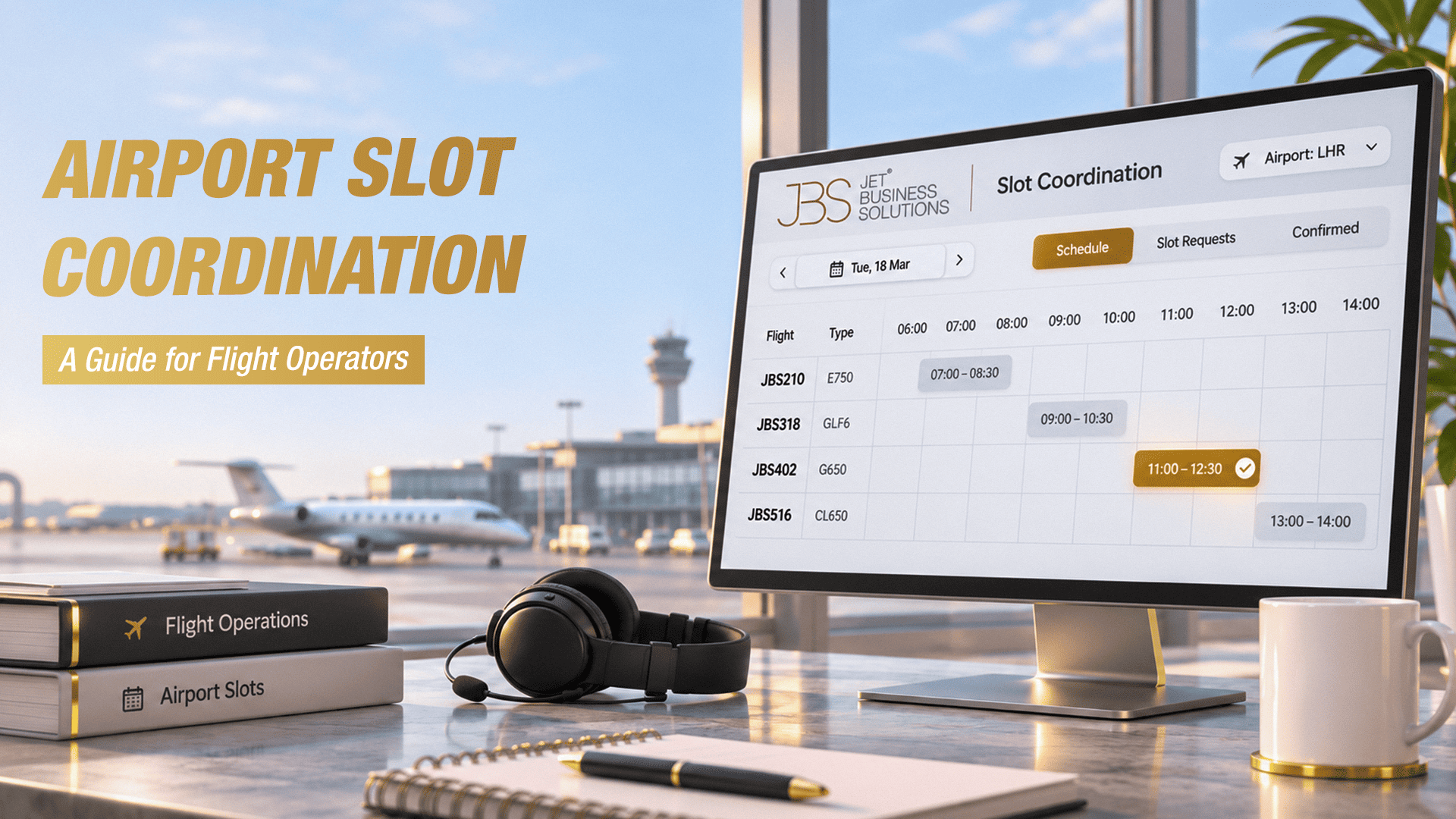
An aircraft can be ready, its crew available, and its permits arranged, yet the preferred arrival time may still be unavailable. At a congested airport, that timing constraint can change the plans for passengers, the aircraft’s next flight, and the team waiting on the ground.
Airport slot coordination allows operators to build schedules around available airport capacity. For airlines, charter companies, and business aviation teams, these allocations influence whether a proposed itinerary is feasible and how much flexibility remains when plans change.
Their significance extends beyond a single arrival or departure: a change at one airport can affect the rest of an international journey.
What Is Airport Slot Coordination?
Airport slot coordination manages planned arrivals and departures against the capacity available at a coordinated airport. An airport slot is the coordinator’s permission to use the infrastructure needed for a planned arrival or departure on a particular date and at a particular time. It supports access to facilities whose capacity must be shared among operators.
Under the Worldwide Airport Slot Guidelines, slot times refer to planned on-block arrival and off-block departure times: when an aircraft reaches or leaves its parking position. These differ from the precise moment it touches down or takes off.
“Landing slot” is often used informally for an arrival allocation. This scheduling permission is distinct from ATC landing clearance and from the separate confirmations associated with the aircraft’s visit.
Who Allocates Airport Slots?
The appointed airport slot coordinator allocates slots based on available capacity and the applicable rules. Operators or their authorized flight support providers submit requests, review available timings, and coordinate any necessary schedule adjustments.
The Worldwide Airport Slot Guidelines, or WASG, provide the industry framework. They are jointly published by IATA, Airports Council International, and the Worldwide Airport Coordinators Group. Their objectives include fair allocation by an independent coordinator and efficient use of available capacity.
Airports fall into three broad categories:
| Airport level | Meaning for scheduling |
| Level 1: Non-coordinated | Capacity generally accommodates demand. |
| Level 2: Schedules facilitated | Potential congestion is addressed through agreed schedule adjustments. |
| Level 3: Coordinated | Operators require slot allocations, subject to applicable exemptions and local procedures. |
The WASG provides common principles, but applicable national or regional regulations take precedence. An experienced aviation support provider can help operators navigate these local requirements, coordinate slot requests, and manage communication with the relevant coordinator, reducing the administrative workload involved in planning the flight.
Airport Slots vs. ATFM Slots: What Is the Difference?
The word “slot” also appears in air traffic flow management, or ATFM. This is a separate process from airport scheduling.
Airport slots concern planned use of airport capacity. ATFM measures and manages traffic when demand and available capacity become unbalanced at airports or in airspace. In Europe, regulated departures may receive a calculated takeoff time, known as CTOT, from the Network Manager. The standard ATFM tolerance window is five minutes before to ten minutes after that time, as explained in EUROCONTROL’s ATFM slot adherence methodology.
This tolerance belongs to the ATFM system; it is not a universal airport-slot window. An operator can have a confirmed airport allocation and still experience a flow-management delay on the day of operation.
The distinction explains why airport slot confirmation alone cannot establish the aircraft’s actual departure time. Airport scheduling and traffic-flow regulation address different capacity constraints, and both can affect the same flight.
How Airport Slot Coordination Works in Practice
Airport slot coordination involves reviewing airport requirements, submitting flight details, and aligning the allocated timings with the itinerary. The operator may manage this process directly or appoint a flight support provider to handle requests and communication with the coordinator.
1- Reviewing Airport Requirements and Proposed Timings
The process begins by establishing whether the planned flight requires airport slots and which procedures apply to its dates and operating hours. The proposed arrival, departure, and length of stay help define the request.
The flexibility of the itinerary also matters. A business meeting, cargo delivery deadline, or onward flight may limit the alternatives an operator can accept. Understanding these constraints early helps the team assess whether available timings suit the trip.
2- Preparing and Submitting the Slot Request
The operator or its appointed support provider prepares the information required by the coordinator. Depending on the airport’s procedures, this may include flight identification, aircraft type, operating dates, requested timings, origin, destination, and type of operation.
Consistent information helps prevent discrepancies between the slot request and the planned flight. Particular attention is needed for overnight journeys, where time zones and date changes can cause confusion. The request is then submitted through the prescribed channel for review.
3- Reviewing Available Timings
Submitting a request does not mean the requested slot is confirmed. The coordinator assesses it against available capacity and the applicable allocation rules. If the preferred timing is unavailable, alternative timings may need to be discussed.
The operator then considers how those alternatives affect the journey. A later arrival might accommodate the passenger’s plans but leave insufficient time before the next departure. A support provider can help assess the options and communicate revised requirements to the coordinator.
4- Aligning Slots with the Flight Itinerary
Once allocated, arrival and departure timings need to work together. The interval between them must accommodate the planned stay and turnaround, while remaining compatible with crew schedules and onward operations.
This connects airport slot coordination with flight planning. Parking availability, handling arrangements, and any timing conditions attached to permits also need to align with the confirmed schedule.
5- Managing Schedule Changes and Cancellations
Coordination continues when plans change. A revised arrival or departure may require notification, an amendment, or a new request, depending on the airport’s procedures.
The operator or support provider manages the required communication and shares confirmed changes with the teams involved. If the flight is canceled, the slot cancellation and associated service cancellations are handled through their respective processes, keeping bookings consistent with the latest itinerary.
Why Slot Planning Timelines Vary
Slot planning operates on different timescales depending on the airport and the type of flight. Airlines arranging recurring services work within seasonal coordination calendars, while individual charter and business aviation movements follow the relevant ad hoc request procedures and booking horizons.
These differences reflect the nature of the operation. An airline is building a repeatable schedule across a season. A business jet operator may be arranging a single visit whose timing depends on a passenger’s commitments. Both require access to capacity, but the timing and handling of their requests can differ.
Early preparation gives an operator more time to explore alternatives and explain their implications to the client. This can make it easier to accommodate a timing change before passenger commitments and onward arrangements are finalized.
Demand around conferences, sporting events, and holiday periods can make flexibility particularly valuable. When several operators seek similar timings, the available options may involve an earlier arrival, a shorter stay, or another suitable airport. The effect on the trip depends on how closely its purpose is tied to a particular place and time.
How Slots Affect the Rest of the Journey
A slot decision can have consequences beyond the airport concerned. For example, a hypothetical business jet itinerary might include a morning arrival, a two-hour ground stay, and an onward sector. If the available arrival is 90 minutes later than requested, retaining the original departure could leave too little time for the planned visit and turnaround.
A later onward departure could preserve the ground stay but affect the next destination. A different airport might offer more suitable timings while extending the passenger’s ground transfer. Each alternative changes a different part of the journey.
The cost impact is similarly dependent on the itinerary. A modest timing change may add little expense, while a move that requires aircraft repositioning or an extended crew stay can have a larger financial effect. Slot availability therefore influences both schedule feasibility and operating costs. In case your crew needs a longer stay, our hotel accommodation service helps arrange suitable rooms and manage booking changes.
For cargo operators, a revised arrival can affect delivery commitments and onward freight connections. For airlines, it can influence passenger connections and the aircraft’s next rotation. The consequences can extend well beyond the flight whose allocation originally changed.
Airport Slots, Permits, and Ground Arrangements
An airport slot establishes a scheduling allocation, while permits and ground arrangements address other requirements of the visit. Their functions are separate, but their timings are closely connected.
Landing and overflight permits address the relevant authority’s permission to land or overfly a country’s territory, where required. An overflight permit is distinct from ATC clearance. When a schedule changes, any timing conditions attached to the relevant permits can affect whether an amendment is necessary.
Parking availability determines whether the aircraft can remain for its intended stay. Handling arrangements cover the support associated with its arrival and departure. A confirmed arrival allocation does not, by itself, confirm an overnight parking arrangement or update a handling booking when the schedule changes.
This creates a coordination task across several parties. The slot coordinator, permit authorities, and ground service teams may each confirm different elements of the flight. A support provider helps keep these arrangements aligned with the same itinerary, reducing discrepancies between what has been allocated and what has been arranged locally.
How Schedule Changes Affect Slot Coordination
Weather, technical issues, or passenger delays can make an agreed schedule unworkable. The effect on an airport slot depends on the revised timing and the applicable local procedures. A delay does not trigger an identical response at every destination.
Operating hours can make the consequences more significant. A relatively small delay near a curfew may leave fewer alternatives than a longer delay earlier in the day. Where a revised operation falls outside permitted hours, the original itinerary may no longer be feasible without further changes or an applicable authorization.
Disruption also creates a gap between proposed alternatives and confirmed arrangements. An available timing may still be under discussion while ground services or onward plans are being revised. Clear communication allows the operator and client to understand which parts of the revised journey are confirmed and which remain unresolved.
The support provider’s role during these changes includes communication with the relevant parties and coordination of the resulting updates. This helps the operator understand the practical options as the situation develops.
Coordinating Your Flight with JBS
Jet Business Solutions includes airport slots and parking arrangements within its flight planning services, alongside support for permits and ground arrangements. Our team helps operators coordinate these requirements around their international itinerary.
If you are preparing a flight to a coordinated airport, contact JBS with your proposed route, dates, aircraft details, and preferred timings to discuss the support your trip requires.