

The Remarkable Evolution of Aircraft Navigation Systems
23 Mar, 2026
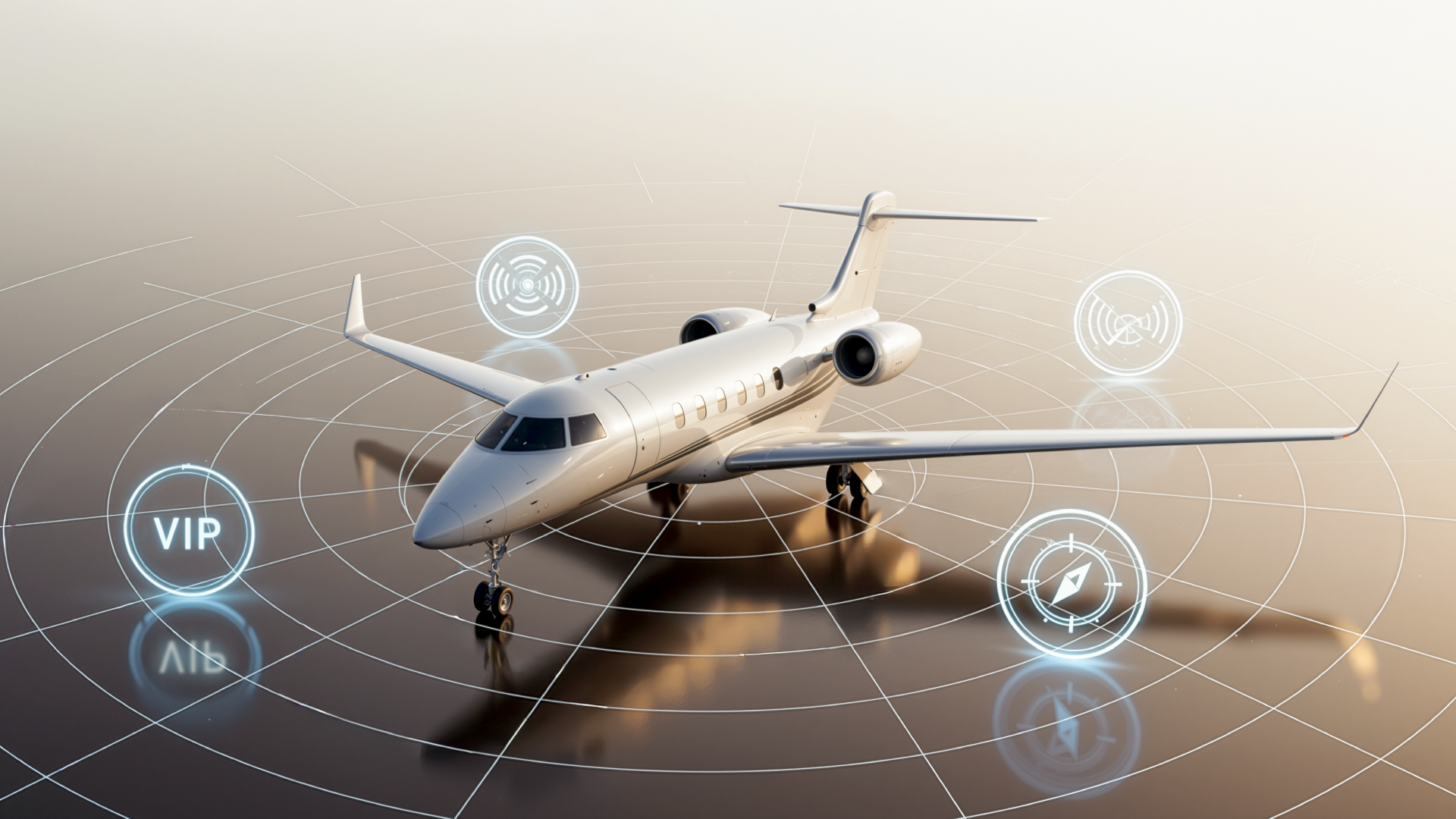
Throughout the past few decades, aircraft navigation systems have undergone some remarkable advancements. Air navigation has come a long way, evolving from ancient celestial navigation methods to today’s sophisticated satellite-based technologies. This development has not only extensively improved how aircraft navigate the skies but has also significantly boosted global air traffic management, safety, and overall efficiency.
To explore the evolution process of aircraft navigation systems, we at JBS decided to construct this informational blog post. In it, you’ll find a comprehensive definition of aircraft navigation systems, examining the transition from early navigation methods to modern-day systems.
What Are Aircraft Navigation Systems, And Why Do Pilots Rely on Them?
What Are Aircraft Navigation Systems?
When speaking of navigation in general, it’s well-known that the process involves moving from one point to another in the most efficient way possible. When a vehicle is involved, this could include planning, recording, and controlling the vehicle to allow for safe movement from the starting point to the destination. Aircraft navigation, on the other hand, is very similar, but involves some in-depth aspects that aren’t essential when traveling on land.
So, going back to defining aircraft navigation systems, we can say that they are the methods and equipment used to determine an aircraft’s position and guide it throughout its journey. These systems allow for a seamless flow of information between the aircraft and air traffic management facilities, which not only assists with positioning and routing but also plays a critical role in ensuring that aircraft can handle unpredictable variables like weather changes or airspace restrictions.
What Are Aircraft Navigation Systems Used For?
The primary goal of navigation systems is to guide the aircraft safely to its destination, all while adhering to regulations, avoiding airspace conflicts, and ensuring optimal operational efficiency.
Ground navigation can be done using landmarks or celestial bodies, but air navigation is not that simple. While up in the sky, pilots often lack clear visual references, especially during flights over unpopulated areas or large bodies of water such as oceans. This presents a challenge to pilots and could lead the plane right into various threats, jeopardizing the safety of the flight. Bad weather and night travel are also considered significant challenges, as pilots will not be able to see their surroundings.
That is why aircraft navigation systems are needed to navigate the sky, in order to ensure aircraft remain on course, avoid obstacles, and comply with air traffic control instructions.
How Do Aircraft Navigation Systems Work?
Aircraft navigation systems are considered the backbone of the flying process, as they include various technologies that work in harmony to provide real-time data about location, speed, and flight path. This way, they allow both pilots and air traffic controllers on the ground to track flights and make decisions that promote safety, efficiency, and reliability.
Getting to Understand Aircraft Navigation Systems
1- Early Navigation Systems: Celestial and Dead Reckoning
In the early days of aviation, pilots used to rely on primitive methods to navigate the vast skies. While such methods were ground-breaking at the time, they had many limitations, which pushed towards developing new navigational systems.
Some of these primitive methods are:
-
Celestial Navigation:
Celestial navigation was one of the earliest navigational systems invented. This technique uses stars, the sun, and the moon to determine the aircraft’s position. Pilots would observe celestial bodies and calculate their position using tools like a sextant. While this method worked well under clear skies, it wasn’t reliable during cloudy nights or stormy conditions.
-
Dead Reckoning:
Dead reckoning was all about using the pilots’ knowledge of wind speed, time, and direction to estimate their current location. Alongside celestial navigation, dead reckoning was a significant improvement, but unfortunately, it was still prone to errors. This was due to the lack of external static reference points, such as radio beacons.
2- Radio Navigation: A New Era in Piloting
The 1930s and 1940s marked the advent of radio navigation—a revolutionary solution that took aircraft navigation systems a huge step ahead. Radio navigation systems such as VOR (Very High Frequency Omnidirectional Range) and DME (Distance Measuring Equipment) enabled pilots to determine their position even in poor conditions.
Radio beacons were strategically placed on the ground to broadcast signals that aircraft could receive. These signals enabled pilots to navigate accurately and eliminated much of the guesswork, allowing them to stay on course more reliably. Additionally, Air Traffic Control systems (ATC) became more streamlined, as radar systems began to track aircraft movements more efficiently.
3- Global Navigation Satellite Systems (GNSS)
The next breakthrough in aircraft navigation systems came with the development of satellites, which revolutionized the aviation industry. By providing precise, real-time location data to pilots, systems like the Global Positioning System (GPS) enable pilots to pinpoint their location across the globe with unparalleled accuracy. This well-known GNSS was launched by the United States in the 1990s and utilizes satellites orbiting around the earth, reducing the reliance on ground-based infrastructure.
With the global coverage that GPS offered, aircraft navigation systems took a huge leap forward in the field of aerial travel. Pilots became free from the limitations of ground-based radio and radar, which led to an increase in the precision of flight paths. This, in turn, improved fuel efficiency and lowered operational costs for airlines, making this innovative system a win-win for both the airline and passengers.
A few years later, another advancement in satellite navigation occurred with the development of augmentation systems. These systems improved the accuracy and reliability of GNSS by providing correction signals. Examples include WAAS (Wide Area Augmentation System) and EGNOS (European Geostationary Navigation Overlay Service), which ensure high-precision positioning even in areas where the basic GPS signal might be weak or obstructed.
4- Inertial Navigation Systems (INS)
INS has played an integral role in modern flight, being an autonomous aircraft navigation system. It uses accelerometers and gyroscopes to measure the aircraft’s movements, calculating its position based on previous locations. Unlike GPS, INS does not rely on external signals, making it valuable when GPS signals are unavailable, such as in extreme weather.
Considered an extension of INS, the Inertial Reference System (IRS) is commonly used in commercial aviation today. This system tracks the aircraft’s movements with extreme accuracy, ensuring that pilots can rely on the system even when flying through remote areas or en route chokepoints where other navigational systems might not be available.
5- Flight Management Systems (FMS) and Autopilot Systems
The development of Flight Management Systems marked another massive step towards modern-day aircraft navigation systems. FMS systems work on integrating data from GPS, radar, and inertial navigation systems to help optimize flight paths and manage the aircraft’s flight plan from takeoff to landing.
The Autopilot System is another key component of modern flight navigation systems. This system automates many critical aspects of the flight, such as altitude adjustments and speed control, allowing flight crews to focus on other aspects of the flight, such as monitoring weather systems and air traffic. Autopilot systems work hand-in-hand with FMS to ensure smooth, efficient, and safe flight operations.
The Future of Aircraft Navigation Systems: What’s Next?
The future of aircraft navigation systems is bright, promising even more innovation, as satellite technology continues to advance and GNSS evolves. This will hopefully provide even higher levels of precision to aerial flights, which in turn will enhance air safety, allow for more direct and fuel-efficient routes, and increase the capacity of global airspace to handle growing traffic demands.
As to where specialists think we are headed, as of 2025, the push seems to be towards autonomous aircraft, which will require even more advanced aircraft navigation systems. This may include advanced artificial intelligence (AI) and systems enhanced with machine learning algorithms to manage all aspects of flight navigation and air traffic control systems.
Where Does JBS Stand in This?
As the technology continues to thrive, Jet Business Solutions strives to stay at the forefront of any technological advancements, ensuring that its clients have access to the latest technology and expertise in air navigation.
If you’re ready to navigate the skies more efficiently and safely, we’re here to help. Reach out today to learn how we can support your aviation needs with cutting-edge aircraft navigation systems.